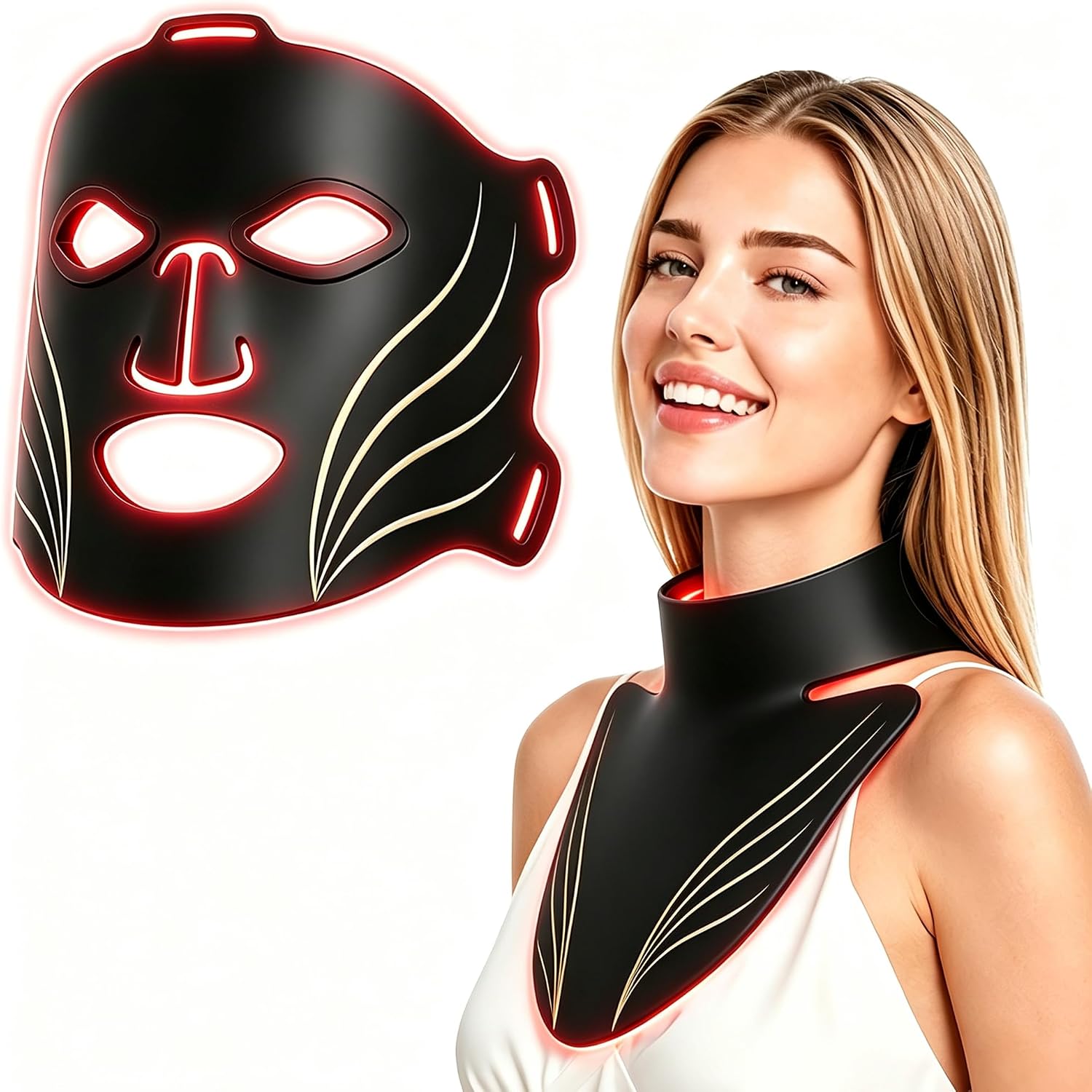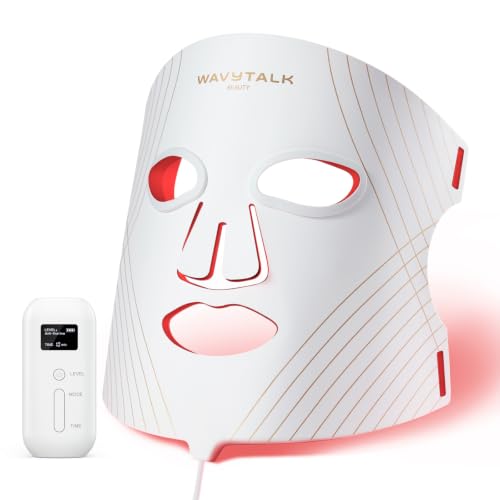

Red and near-infrared light are not interchangeable labels: they describe different wavelength ranges, and mask design determines which are included. This guide explains the distinction and considers what the CurrentBody Red Light Therapy LED Face Mask listing actually specifies.
For November 2026, the available product data covers 1 mask, so this is a focused explanation rather than a broad comparison. For fit considerations, see our guide to lightweight LED masks for small faces.

Pros
- Clinically proven wavelengths
- Extended jawline coverage
- Veritace quality verification
- Comfortable flexible silicone
- Visible results in 4 weeks
Cons
- Potential battery issues reported
- Expensive for the segment
- Limited to 10-minute sessions
Specifications
| Color | White |
|---|---|
| Product Group | Beauty |
| Binding | Health and Beauty |
Verify the current product variation before purchase; specifications may change.
Detailed Review
What stands out in the currently available product data:
- Full-face and jawline coverage with flexible silicone design
- Three precise wavelengths: 633nm red, 830nm near-infrared, 1072nm deep near-infrared
- 236 LEDs for comprehensive light therapy
- Veritace verified LEDs ensure precise wavelength delivery
- 10-minute sessions, 3-5 times per week for optimal results
- Suitable for all skin types, including sensitive skin
LED masks use light-emitting diodes to deliver selected wavelengths at the skin surface. Red light and near-infrared light sit in different parts of the spectrum; a mask that combines them offers distinct wavelength outputs, not one light that changes names.
Wavelengths matter more than color names
Wavelength is measured in nanometers, abbreviated nm. The product listing specifies red light at 633 nm, near-infrared at 830 nm, and deep near-infrared at 1072 nm, giving shoppers concrete figures instead of color labels alone.
Those figures describe emitted wavelengths, not treatment results. The published details do not provide irradiance, energy dose, or independent comparative research, so wavelength alone cannot establish how effective one mask is or how its output compares with another.
Understand what a three-wavelength design adds
CurrentBody describes its Series 2 mask as using 236 LED bulbs with three wavelengths. That gives it a broader specified wavelength mix than a device listing only one red wavelength, but breadth does not automatically prove better performance.
The listing attributes fine-line, wrinkle, redness, and complexion benefits to the mask. Treat those as manufacturer claims: the published information does not include study details, treatment outcomes, or evidence that isolates each wavelength’s contribution.
Check dose and protocol before comparing claims
Useful comparisons require more than wavelength and LED count. Look for irradiance at the treatment surface, energy dose per session, recommended session length, treatment frequency, and whether the device gives separate or simultaneous wavelength outputs.
These specifications are not included in the published product data. Do not infer dose from 236 bulbs or assume that additional wavelengths mean stronger treatment; ask the manufacturer for the manual and technical specifications before purchase.
Fit and coverage affect everyday usability
The manufacturer describes a flexible liquid-silicone shape designed for fit and coverage, and says its layout was tested on thousands of faces. That is a manufacturer statement, not independent proof that the mask will fit every face comfortably.
Consider eye openings, nose and chin contact, strap adjustment, and whether the mask remains stable during the stated routine. If fit is uncertain, compare sizing and return terms; our LED masks and light therapy category offers broader category context.
Comfort and routine determine whether features earn their place
A multi-wavelength mask only makes sense if its protocol fits your schedule and the device feels wearable for the full session. The published details do not state session duration, controls, battery life, charging method, or whether treatment requires a connected app.
Confirm those details in current manufacturer documentation rather than assuming convenience from the flexible silicone construction. Also check cleaning instructions, storage needs, warranty coverage, and whether replacement parts or consumables create ongoing costs.
Safety information deserves equal weight
The product listing directs buyers to review its contraindications before purchase and use, but the published data does not enumerate them. Read the manufacturer’s complete safety guidance and consult a qualified professional if a health condition, medication, or photosensitivity concern may affect use.
Follow the manual’s use instructions, keep the device clean, and stop if use causes an unexpected reaction. Do not assume that red or near-infrared light is suitable for everyone, or substitute a consumer mask for professional assessment.
Why You Should Trust Us
We assess only the information available for this product and separate listed specifications from manufacturer benefit claims. We do not present unprovided measurements, clinical evidence, personal testing, or ownership experience as fact.
That evidence boundary matters here: the listing provides wavelengths, LED count, material, and design claims, but not dose, protocol, warranty, or independent study details. We use those gaps to identify what shoppers should verify rather than fill them with assumptions.
Final Thoughts
Among the listed products, the CurrentBody Red Light Therapy LED Face Mask is the only candidate, so it is the sole overall option in this comparison, not a proven category winner. Its three specified wavelengths and flexible silicone design may suit shoppers seeking a multi-wavelength mask with stated coverage features.
There is no separate best-value or specialist pick from a one-product dataset. Consider this mask only after confirming its dose, routine, contraindications, warranty, and ownership costs; the listing’s wavelength variety alone cannot establish superior results or value.
For a wider shortlist, browse our LED mask category and LED device cleaning and storage guidance. The best fit depends on documented output, comfortable coverage, a realistic protocol, and clear safety instructions.
FAQs
What is the difference between red light and near-infrared light?
They are different wavelength ranges. This mask’s listing identifies red light at 633 nm and near-infrared light at 830 nm, plus deep near-infrared at 1072 nm.
Does near-infrared light mean a mask works better?
Not by itself. Wavelength is one specification; dose, irradiance, protocol, fit, and the quality of supporting evidence also matter, and the published listing does not provide all of these.
Which wavelengths does the CurrentBody mask list?
The product information lists red at 633 nm, near-infrared at 830 nm, and deep near-infrared at 1072 nm. It also specifies 236 LED bulbs.
Can wavelength alone predict LED mask results?
No. Wavelength does not disclose delivered dose or establish outcomes, and the published information does not include independent comparative evidence. Treat benefit language as manufacturer claims.
How often should I use an LED face mask?
Follow the specific device manual for session duration and frequency. Those protocol details are absent from the published product information, so do not invent a schedule based on another mask.
Are LED face masks safe for everyone?
No universal suitability claim is justified. Review the manufacturer’s contraindications and seek professional advice if medication, photosensitivity, a health condition, or another concern could affect use.
What should I verify before buying an LED mask in 2026?
Check wavelength, irradiance, dose, session protocol, fit, cleaning instructions, warranty, and any app or replacement costs. For practical upkeep, see our red light device care guide.
Evidence and safety references
These references support the general technology and safety context. Product specifications can change; confirm the current manual and regulatory status before use.
- Systematic review and meta-analysis: LEDs in skin therapy
- Systematic review: photobiomodulation safety for skin rejuvenation
- Systematic review: home-use photobiomodulation devices
Safety note: Beauty devices are not a substitute for diagnosis or treatment. Follow the device instructions and consult a qualified clinician if you have a skin condition, take photosensitizing medication, are pregnant, or are unsure whether a device is appropriate.