
Active ingredients take weeks to transform skin texture, but human memory fails across long treatment timelines. Objective digital measurement eliminates guesswork when monitoring barrier repair, oil control, and collagen density.
Modern personal analysis tools use mobile software to log historical hydration readings and pore clarity over months. Exploring options like a smart analysis tool helps you build reliable diagnostic records at home during October 2026.

Pros
- Large, clear display
- High-resolution camera
- AI-powered personalized plans
- Multi-language support
- Suitable for home and professional use
Cons
- Expensive for the segment
- No first-hand testing data
- Limited to facial analysis only
Specifications
| Package Dimensions | 23.75 x 21 x 21 inches; 24.1 pounds |
|---|---|
| UPC | 635408594327 |
| Manufacturer | REEOOH |
| ASIN | B0DS8N8BH2 |
| Best Sellers Rank | #610,076 in Beauty & Personal Care (See Top 100 in Beauty & Personal Care) #7,155 in Salon & Spa Equipment #122,649 in Beauty Tools & Accessories |
Verify the current product variation before purchase; specifications may change.
Detailed Review
What stands out in the currently available product data:
- 13.3-inch high-definition screen displays skin details clearly
- 38-megapixel camera captures pores, wrinkles, and fine lines
- 8 spectral modes for comprehensive moisture and texture analysis
- AI-driven system identifies issues and generates customized care plans
- Multiple detection modes cover pores, color uniformity, and oil distribution
- Supports 15 languages for global usability
Best For / Avoid If
Best for buyers prioritizing
- Large, clear display
- High-resolution camera
- AI-powered personalized plans
Consider another option if
- Expensive for the segment
- No first-hand testing data
- Limited to facial analysis only

Pros
- Portable and easy to carry
- LED display for clear readings
- Measures moisture and oil
- Works for home and salon
- Simple, straightforward operation
Cons
- No clinical validation data included
- Moderate user rating only
- No detailed specifications listed
Detailed Review
What stands out in the currently available product data:
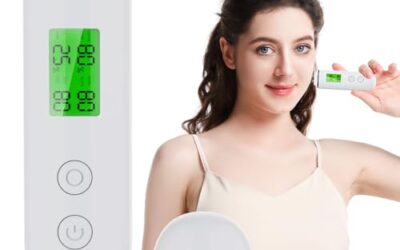
- Portable skin analyzer for on-the-go hydration and oil checks
- LED display provides clear digital readouts
- Measures both moisture and sebum for a fuller skin profile
- Suitable for home, salon, and spa use
- Compact design fits easily in a travel kit or treatment tray
- Simple tester format requires no complex setup
Sensor Accuracy and Measurement Technology
App tracking depends entirely on the raw data captured by hardware sensors. Simple contact probes measure electrical impedance to calculate surface water content and lipid density within the stratum corneum.
Advanced diagnostic consoles deploy multi-spectral light paths to evaluate subsurface conditions. High-resolution optical sensors capture porphyrin density, hidden melanin clusters, and fine structural laxity that basic capacitive metal pins miss.
Software Logging and Data Visualization
A companion mobile app must store sequential scans to reveal longitudinal trends. Raw single-point readings provide little diagnostic value without temporal graphs that correlate product changes with epidermal shifts.
Top platforms generate automated percentage shifts across hydration, oil balance, and erythema. Look for applications that allow custom diary entries alongside scans to document new active formulations.
Optical Resolution and Spectral Imaging Range
Standard smartphone cameras lack standardized light diffusion, creating severe exposure inconsistencies across check-ins. Dedicated clinical systems provide controlled RGB, UV, and cross-polarized light environments to isolate subsurface congestion.
Ultra-dense sensor grids above 30 megapixels document microscopic pore volume shifts over several months. You can review advanced optical setups within our guide to facial imaging machines for deeper clinical specs.
Form Factor and Workflow Integration
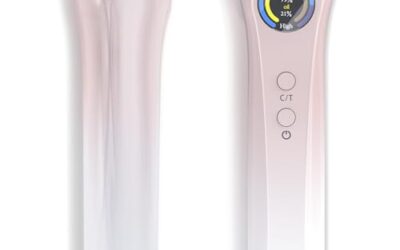
Bulky equipment often creates user friction, discouraging regular diagnostic tracking. Handheld diagnostic pens fit seamlessly into daily vanity setups, facilitating quick thirty-second checks after morning cleansing routines.
Countertop imaging cabins require dedicated space and stable power supplies for continuous operation. Select a platform format that aligns with your patience for protocol steps and physical space constraints.
Multi-Zone Face Mapping
Facial skin exhibits varied physiological characteristics across the forehead, cheeks, and nasal folds. Effective software separates T-zone sebum outputs from delicate lateral orbital moisture levels to avoid false systemic diagnoses.
Segmented tracking prevents over-exfoliation on sensitive cheek planes while guiding targeted chemical exfoliant use on congested central zones. Check user guides across our skin analysis section for targeted protocol recommendations.
| Hardware Class | Primary Metric | App Connectivity | Best Placement |
|---|---|---|---|
| Bio-Impedance Sensor | Moisture and Oil Ratio | Bluetooth or Direct LCD | Compact Vanity or Travel |
| Multi-Spectral Console | Pores, Wrinkles, Pigment | Wi-Fi and Cloud Logs | Dedicated Treatment Counter |
Why You Should Trust Us
We evaluate personal care equipment by dissecting manufacturer diagnostic whitepapers, spectral sensor specifications, and software update histories. Our analysis focuses on data reproducibility, user interface clarity, and actual diagnostic utility for at-home routines.
Our editorial approach prioritizes long-term ownership viability over marketing promises. We never receive incentives to skew technical comparisons, ensuring all hardware assessments remain discerning, accurate, and completely transparent.
Final Thoughts
For dedicated home clinic environments requiring full diagnostic imaging, the 13.3 Inch 3D Digital Skin Analyzer Detector delivers clinical-grade utility. Its multi-spectral cameras capture minute variations in pore dilation, hyperpigmentation, and subsurface hydration profiles.
For everyday routine adjustments, the Portable Skin Moisture & Oil Analyzer represents the smartest practical value. The pocket-sized probe gives instant bio-impedance feedback to confirm whether your evening barrier cream actually prevents transepidermal water loss.
Establish baseline readings on freshly cleansed skin before introducing potent actives. Pair your diagnostic records with targeted modalities by browsing our curated guide to LED masks for responsive barrier support.
FAQs
Why should you learn how to track skincare progress with an app in 2026?
Visual memory cannot accurately quantify microscopic shifts in sebum production, water loss, or pore congestion over months. Software logs create an objective paper trail that reveals whether your costly active serums deliver measurable clinical results.
How often should you log digital skin scans?
Bi-weekly photo logs capture meaningful structural updates while avoiding normal daily water retention fluctuations. Daily bio-impedance checks help verify short-term hydration retention following specific cleansing and moisturizing steps.
Do smartphone cameras match dedicated skin analyzers?
Standard phone cameras lack calibrated cross-polarized lighting, causing ambient room lamps and shadowing to alter baseline readings. Dedicated devices isolate external glare to maintain consistent exposure levels across multiple tracking sessions.
What baseline state gives the most accurate app reading?
Measure your face fifteen to twenty minutes after gentle cleansing without applying any topicals. This waiting window allows your natural lipid layer to stabilize, revealing unmasked barrier function rather than recently applied cosmetic slip.
Can tracking apps identify damaged skin barriers?
Persistent drops in capacitance readings paired with elevated erythema indicators frequently signal impaired barrier function. Cross-reference your results with our selections for personalized beauty routines to calibrate routine intensity safely.
Are capacitive contact probes completely safe on reactive skin?
Non-invasive microcurrent pins emit imperceptible sensor charges that evaluate hydration without disturbing active breakouts. Clean probe contacts with alcohol between sessions to prevent spreading surface acne bacteria across facial zones.
How long before active skincare changes appear in app logs?
Surface moisture improvements log within days of using emollient formulas, while retinoid-induced cellular turnover requires eight to twelve weeks. Structural wrinkle reduction and pigment dispersal demand sustained tracking across complete cellular renewal cycles.
Evidence and safety references
These references support the general technology and safety context. Product specifications can change; confirm the current manual and regulatory status before use.
Safety note: Beauty devices are not a substitute for diagnosis or treatment. Follow the device instructions and consult a qualified clinician if you have a skin condition, take photosensitizing medication, are pregnant, or are unsure whether a device is appropriate.