
Skincare routines often fail because surface appearance hides underlying barrier disruption and moisture loss. Smart diagnostic scanners solve this problem by measuring dermal variables directly instead of relying on guesswork.
Whether you need a quick check on moisture retention or an extensive facial imaging booth, understanding the technology prevents costly diagnostic errors. Reviewing the fundamental mechanics across 2 popular devices in October 2026 shows how electrical impedance and multi-spectral light uncover real skin metrics, as detailed in our guide to smart skin analysis tools.

Pros
- Large, clear display
- High-resolution camera
- AI-powered personalized plans
- Multi-language support
- Suitable for home and professional use
Cons
- Expensive for the segment
- No first-hand testing data
- Limited to facial analysis only
Specifications
| Package Dimensions | 23.75 x 21 x 21 inches; 24.1 pounds |
|---|---|
| UPC | 635408594327 |
| Manufacturer | REEOOH |
| ASIN | B0DS8N8BH2 |
| Best Sellers Rank | #610,076 in Beauty & Personal Care (See Top 100 in Beauty & Personal Care) #7,155 in Salon & Spa Equipment #122,649 in Beauty Tools & Accessories |
Verify the current product variation before purchase; specifications may change.
Detailed Review
What stands out in the currently available product data:
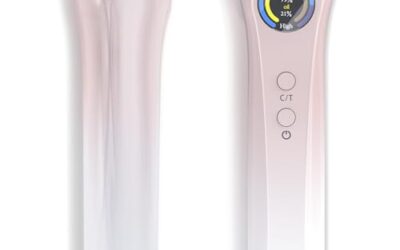
- 13.3-inch high-definition screen displays skin details clearly
- 38-megapixel camera captures pores, wrinkles, and fine lines
- 8 spectral modes for comprehensive moisture and texture analysis
- AI-driven system identifies issues and generates customized care plans
- Multiple detection modes cover pores, color uniformity, and oil distribution
- Supports 15 languages for global usability
Best For / Avoid If
Best for buyers prioritizing
- Large, clear display
- High-resolution camera
- AI-powered personalized plans
Consider another option if
- Expensive for the segment
- No first-hand testing data
- Limited to facial analysis only

Pros
- Portable and easy to carry
- LED display for clear readings
- Measures moisture and oil
- Works for home and salon
- Simple, straightforward operation
Cons
- No clinical validation data included
- Moderate user rating only
- No detailed specifications listed
Detailed Review
What stands out in the currently available product data:
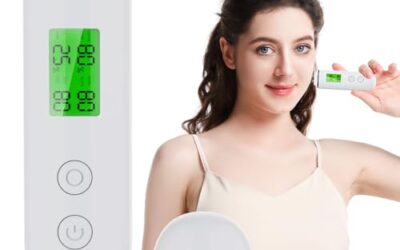
- Portable skin analyzer for on-the-go hydration and oil checks
- LED display provides clear digital readouts
- Measures both moisture and sebum for a fuller skin profile
- Suitable for home, salon, and spa use
- Compact design fits easily in a travel kit or treatment tray
- Simple tester format requires no complex setup
Bioelectric Impedance Analysis for Hydration and Sebum
Compact skin analyzers rely primarily on bioelectric impedance analysis to measure moisture content in the stratum corneum. The device passes a safe, micro-current electrical signal between two gold-plated or stainless steel probe contacts.
Water conducts electricity efficiently, while lipids and dead keratinized cells create measurable resistance to the current flow. The internal microchip converts this electrical resistance value into an intelligible percentage of water and oil volume.
Impedance accuracy requires consistent contact pressure and clean skin free from heavy silicone coatings. Skewed measurements occur if you press too hard or test immediately after applying water-based toners.
Multi-Spectral Optical Imaging Sensors
Advanced facial imaging stations employ polarized light arrays, standard white light, and ultraviolet spectrum illumination. High-resolution optical sensors capture multiple exposures under these distinct wavelengths within seconds.
Cross-polarized light eliminates specular reflection to reveal deep erythema, broken capillaries, and active inflammation below the skin surface. Parallel polarized light sharpens surface texture, making fine lines and enlarged pore structures easy to calculate.
Reviewing our breakdown of the facial imaging machines for home use clarifies how clinic-level sensors capture deep pigment variations before spots become visible to the eye.
Ultraviolet and Wood Lamp Fluorescence
Fluorescent analysis illuminates skin using narrow-band UVA radiation around the 365 nanometer wavelength. Porphyrins produced by cutibacterium acnes glow bright orange-red under these controlled conditions.
This allows visual software to map bacterial congestion zones long before visible breakouts emerge. The same light reveals latent sun damage, showing melanin clusters deep in the epidermal basal layer.
Diagnostic fluorescence helps assess chemical exfoliation progress and sun protection efficacy over time. Home devices use lower UV intensities to guarantee safe, repeated scans without skin irritation.
Algorithmic Surface Mapping and 3D Modeling
High-end digital skin scanners construct three-dimensional mesh models from multi-angle photographs. Machine-learning algorithms compare your facial topography against vast demographic databases categorized by age, ethnicity, and lifestyle.
These algorithms detect microscopic shadow patterns to score wrinkle volume, skin sag, and structural elasticity changes accurately. Consistent focal distances and fixed lighting chambers remain essential for reliable software tracking.
Without stable positioning, minor head tilts alter shadow depths and confuse the automated surface evaluation software. Fixed booths remove this variable entirely by maintaining a standardized photography perimeter.
Display Clarity and Data Portability
Data output formats dictate whether a device fits quick morning checks or professional consults. Handheld tools use backlit LCDs to display immediate ratios without external wireless handshakes.
Professional rigs incorporate integrated operating screens and cloud transmission modules for detailed reporting. Users seeking historical logs often prefer an app-connected skin analysis scanner that automatically plots hydration curves across days.
Make sure the software export format allows easy sharing or local saving for continuous evaluation. Closed ecosystems that lock diagnostic history behind paid tiers limit long-term utility.
Why You Should Trust Us
Our analysis focuses on objective engineering standards, documented sensory physics, and independent consumer feedback. We evaluate consumer personal-care electronics by assessing their functional hardware specifications, component longevity, and software stability rather than promotional manufacturer claims.
We systematically cross-examine user manuals, technical data sheets, and published optical studies to understand device limits. Our recommendations prioritize transparent build quality and repeatable data output over novelty marketing.
Final Thoughts
Selecting the right analytical hardware depends on whether you require immediate barrier monitoring or clinic-level imaging. For dedicated studio environments, aesthetic spas, or demanding individuals, the 13.3 Inch 3D Digital Skin Analyzer Detector operates as our best overall selection. Its 38-megapixel camera, multi-spectral array, and expansive display track pore dilation, UV pigmentation, and deep dermal hydration reliably.
For daily travel routines and fast barrier checks, the Portable Skin Moisture & Oil Analyzer serves as the best value pick. It provides instantaneous readings of surface hydration and oiliness, confirming whether your moisturizer barrier held up against dry indoor heating. Discovering your personal baseline prevents over-exfoliation and excessive product layering.
Pairing reliable diagnostic readouts with personalized routines maximizes treatment success over time. If you plan to customize active formulas according to diagnostic data, read our overview of the smart beauty devices for personalized care to complete your setup.
FAQs
How do smart skin analyzers work to measure moisture?
Smart analyzers pass a weak, imperceptible alternating electric current through small contact points touching the outer skin surface. Because water conducts electricity and dry lipid matrices resist it, the sensor measures electrical impedance and translates it to hydration percentages.
Can home skin analyzers diagnose skin cancer or dermatological diseases?
No, consumer and spa-grade skin analyzers are cosmetic monitoring devices rather than diagnostic medical tools. They evaluate hydration levels, superficial pigment, and oil distribution, but cannot replace a clinical biopsy or an evaluation by a board-certified dermatologist.
How often should you scan your face using an analyzer?
Deep optical and UV spectral imaging is best conducted once every four to six weeks to observe true epidermal turnover. Surface contact moisture testers can be used daily before applying skincare to track baseline hydration changes.
Why do readings fluctuate when testing the same facial area twice?
Variations occur if probe angle, contact pressure, or localized skin temperature changes between attempts. Pressing harder flattens the stratum corneum, increasing contact surface area and artificially elevating the conductivity reading.
What makes the best how do smart skin analyzers work setups accurate in 2026?
The most accurate devices combine multi-spectral imaging with calibrated light chambers to eliminate room shadows. Standardized lighting conditions prevent natural ambient sunlight from skewing wrinkle depth calculations and skin tone evaluation.
Do I need to wash my face before taking a scan?
Yes, scan consistency requires testing on bare, clean skin that has rested for twenty minutes after washing. This waiting period allows natural sebum secretion and surface blood flow to stabilize after contact with tap water.
Are skin analyzer UV lights dangerous for regular use?
Cosmetic skin imaging machines use low-intensity narrow-band UVA light designed for quick flash exposures. While safe for brief scans, users should keep their eyes closed during photography to avoid ocular glare, as discussed across the smart skin analysis category.
Can smart skin analyzers measure product penetration?
Sensors measure surface impedance and visual residue rather than molecular absorption within live tissue layers. They confirm whether a formulation maintains surface hydration, but cannot quantify exact delivery into deeper dermal layers.
Evidence and safety references
These references support the general technology and safety context. Product specifications can change; confirm the current manual and regulatory status before use.
Safety note: Beauty devices are not a substitute for diagnosis or treatment. Follow the device instructions and consult a qualified clinician if you have a skin condition, take photosensitizing medication, are pregnant, or are unsure whether a device is appropriate.