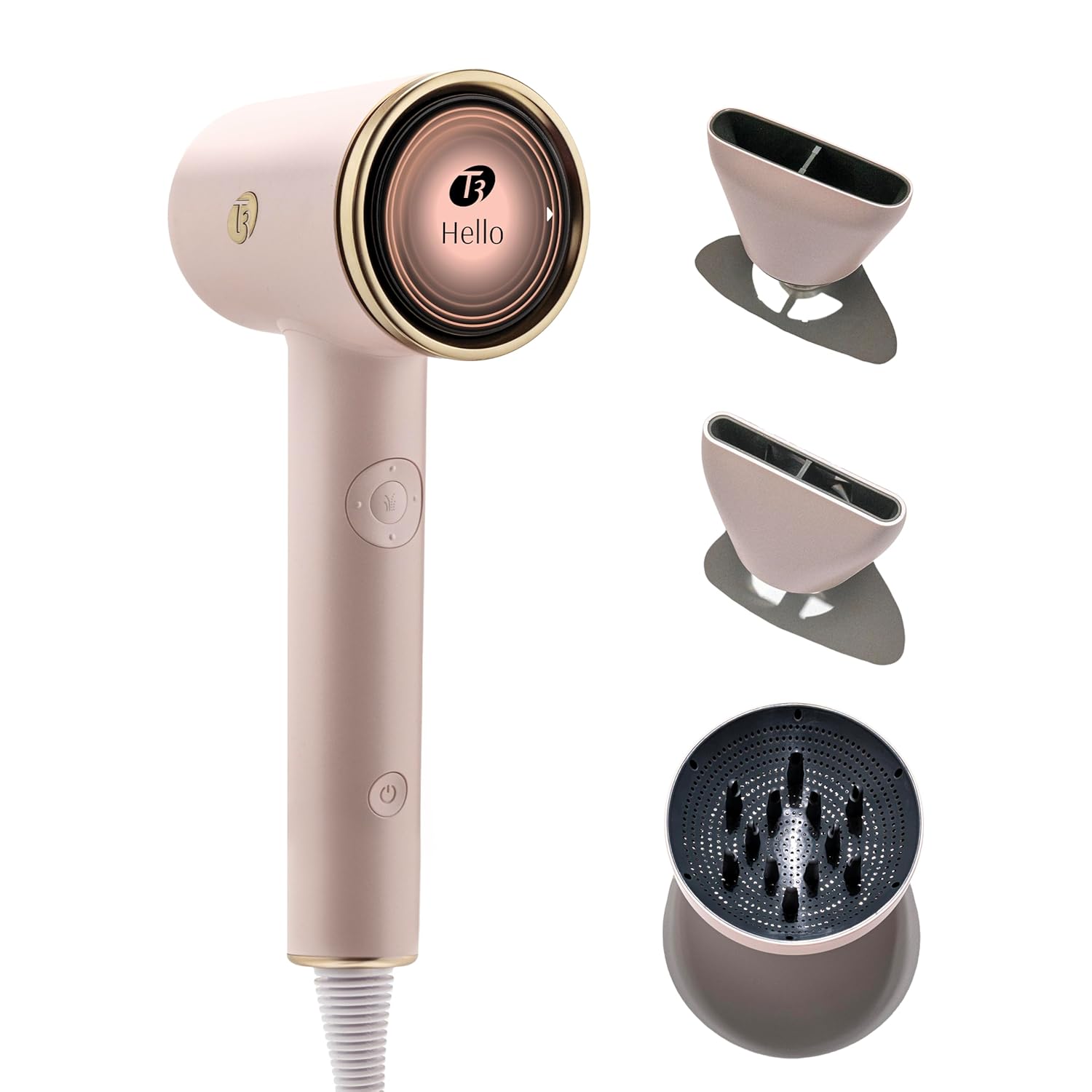

Styling creams, oils, and sprays can leave a film on dryer attachments, while lint and dust collect around openings. Cleaning method matters: excess water, sharp tools, or harsh solvents can damage finishes and components.
This guide explains how to inspect attachments, choose a conservative cleaning approach, and know when residue calls for manufacturer guidance. For broader dryer comparisons, see our premium hair dryers category.

Pros
- Quiet even at high power
- Lightweight and compact
- Dries hair quickly
- Adjustable heat and airflow
- Three-year warranty
Cons
- Premium price for the segment
- Warranty requires product registration
- Published specifications are limited
Detailed Review
What stands out in the currently available product data:
- Negative ion technology helps reduce frizz and static for smoother, shinier hair.
- Intelligent heat control adjusts temperature to help prevent heat damage while drying quickly.
- Compact 1.32-pound body and balanced design make extended styling sessions easier on your arms.
- Quiet operation lets you dry and style without the loud motor noise typical of many dryers.
- Adjustable heat and airflow settings give you control for fine, thick, short, or long hair.
- Included diffuser helps define curls and adds volume while distributing air gently.
Best For / Avoid If
Best for buyers prioritizing
- Quiet even at high power
- Lightweight and compact
- Dries hair quickly
Consider another option if
- Premium price for the segment
- Warranty requires product registration
- Published specifications are limited
Identify the attachment and its materials
First, turn the dryer off, unplug it, and let the attachment cool fully. Remove it only as directed by the manufacturer, then check its manual for cleaning instructions and material restrictions.
Attachments may include coated plastic, metal, silicone, or magnetic connection points. Because product data here does not specify attachment materials or cleaning instructions, avoid assuming that one solvent or soaking method suits every part.
Separate residue from lint and dust
Styling-product buildup often feels tacky or looks like a cloudy film; lint usually appears as loose fibers near openings. Identifying the deposit helps prevent scrubbing a vent when gentle surface cleaning is all that is needed.
Inspect the attachment under good light, including its rim, slots, and connection area. Do not push debris farther inside or insert pins, blades, or other sharp tools into narrow openings.
Start with the least aggressive cleaning method
For a removable attachment, begin with a soft, dry, lint-free cloth. If the manual permits moisture, lightly dampen the cloth with water and wipe the affected surface rather than immersing the attachment.
Keep liquid away from electrical contacts, the dryer inlet, and any area that connects to the appliance. Do not spray cleaner directly onto the attachment; apply only a small amount to the cloth when instructions explicitly allow a cleaner.
Loosen stubborn film without scratching
For a persistent film, hold a damp cloth against the residue briefly if the manual allows moisture, then wipe gently. Repeat in short passes instead of applying more force, since friction can scratch or wear a surface coating.
A soft-bristled brush may help around exterior grooves when the manufacturer permits brushing. Skip abrasive pads, scouring powders, acetone, alcohol, and concentrated household cleaners unless the device instructions specifically approve them.
Clean openings and magnetic connection points carefully
Use a dry soft brush or cloth around vents and attachment edges, moving debris outward. Do not disassemble a nozzle or scrape inside a narrow channel; hidden components may be difficult to inspect or replace.
If the attachment connects magnetically, wipe contact surfaces gently and keep them dry before reattaching. The ELLA BELLA® Ionic Hair Dryer with Diffuser is described as having three magnetic nozzles, but its published product details do not state a cleaning procedure.
Dry fully and check before use
After any permitted damp cleaning, air-dry the attachment completely before reconnecting it. Do not use heat, a towel that sheds fibers, or the dryer itself to speed drying unless the manual says that method is suitable.
Once dry, check for remaining film, loose debris, cracks, warped edges, or a loose fit. Stop using an attachment that appears damaged or no longer stays securely connected, and contact the manufacturer for model-specific guidance.
Why You Should Trust Us
Our guidance separates published product information from general care principles. The available details identify the ELLA BELLA dryer’s magnetic nozzles and multiple heat settings, but provide no attachment-cleaning instructions or material specifications.
We therefore do not recommend an unverified chemical, soaking routine, or disassembly method. Check the manual or ask the manufacturer before using anything beyond a soft cloth and any cleaning method explicitly permitted for your attachment.
Final Thoughts
For routine surface residue, a cool, detached attachment and gentle wiping offer a cautious starting point, provided the manual allows it. The ELLA BELLA® Ionic Hair Dryer with Diffuser is the only listed model, so this information cannot support a meaningful comparison or separate overall and value winners.
Its stated magnetic nozzles make connection-area care relevant, but the published specifications do not establish which cleaners are safe. Consider this dryer only if its stated features suit your needs; confirm care instructions and warranty coverage before treating its attachments with liquids or chemicals.
For adjacent buying context, browse our lightweight hair dryers for travel guide or premium hair dryer gift guide. Neither replaces model-specific maintenance instructions.
FAQs
How often should I clean dryer attachments?
Check attachments regularly and clean them when visible residue or debris appears. Frequency depends on product use and the manufacturer’s care directions; no universal schedule is provided for this dryer.
Can I soak a dryer nozzle in water?
Do not soak it unless its manual explicitly permits immersion. Water can reach connection areas or remain in openings, and the published product information does not confirm that its nozzles are waterproof.
Can I use alcohol to remove styling-product residue?
Not without manufacturer approval. Alcohol may affect some finishes or plastics, and no material or solvent compatibility information is supplied for the listed attachments.
How do I remove sticky residue without scratching?
Use a soft cloth and gentle pressure, adding only moisture that the manual permits. Avoid scraping, abrasive pads, and repeated force; ask the manufacturer if residue remains.
Can I clean an attachment while it is connected?
No. Switch off and unplug the dryer, allow it to cool, and detach the nozzle according to its instructions before cleaning. Keep liquid away from the appliance and connection points.
What should I do if a vent is clogged?
Remove only loose, accessible debris using a soft dry brush if the manual permits. Do not probe inside with sharp tools or dismantle the attachment; seek manufacturer guidance if airflow openings remain blocked.
When should I replace an attachment instead of cleaning it?
Consider replacement or service if it is cracked, warped, loose, or still obstructed after approved cleaning. Stop using it when damage prevents secure attachment, and check warranty terms before buying a replacement.
Where can I find care advice for the dryer itself?
Use the product manual or contact the manufacturer for the exact model. Our premium hair dryers category offers broader product context, not a substitute for maintenance guidance.
Evidence and safety references
These references support the general technology and safety context. Product specifications can change; confirm the current manual and regulatory status before use.
- Study: hair-shaft damage, dryer temperature and distance
- Study: effects of heat treatment on hair structure
Safety note: Beauty devices are not a substitute for diagnosis or treatment. Follow the device instructions and consult a qualified clinician if you have a skin condition, take photosensitizing medication, are pregnant, or are unsure whether a device is appropriate.