
If you are comparing LED face masks, wavelength numbers can look like a shortcut to choosing one. They identify the light emitted, but they do not establish that a mask will suit your skin, fit well, or deliver a particular result.
For what do led face mask wavelengths mean, start with nanometers, abbreviated nm: a unit that describes light wavelength. This guide explains how to read those figures, assess supporting information, and use manufacturer instructions carefully. For fit considerations, see our guide to lightweight LED face masks for small faces.

Pros
- Clinically proven wavelengths
- Extended jawline coverage
- Veritace quality verification
- Comfortable flexible silicone
- Visible results in 4 weeks
Cons
- Potential battery issues reported
- Expensive for the segment
- Limited to 10-minute sessions
Specifications
| Color | White |
|---|---|
| Product Group | Beauty |
| Binding | Health and Beauty |
Verify the current product variation before purchase; specifications may change.
Detailed Review
What stands out in the currently available product data:
- Full-face and jawline coverage with flexible silicone design
- Three precise wavelengths: 633nm red, 830nm near-infrared, 1072nm deep near-infrared
- 236 LEDs for comprehensive light therapy
- Veritace verified LEDs ensure precise wavelength delivery
- 10-minute sessions, 3-5 times per week for optimal results
- Suitable for all skin types, including sensitive skin
What do led face mask wavelengths mean when buying a mask?
1. Read nanometers as a description, not a verdict
A wavelength measures the distance between repeating peaks of a light wave. In LED-mask specifications, visible red light and invisible near-infrared light are often listed by wavelength in nanometers.
The number helps distinguish one type of emitted light from another. It does not, by itself, tell you how much light reaches skin, whether a device has been studied for your intended use, or whether you will see a particular outcome.
2. Understand red, near-infrared, and deep near-infrared
Red light is visible. Near-infrared is beyond the visible red portion of the spectrum, while deep near-infrared refers to longer wavelengths within the broader infrared region. These labels describe spectral regions; they are not rankings of quality.
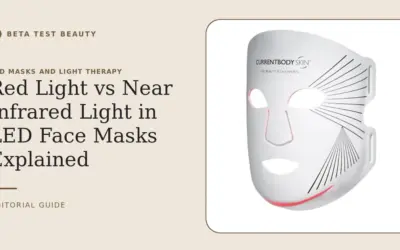
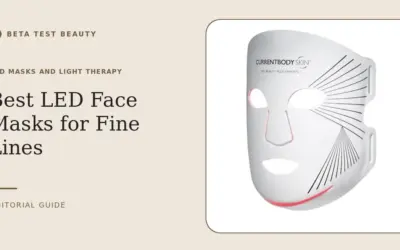
CurrentBody Red Light Therapy LED Face Mask lists red at 633 nm, near-infrared at 830 nm, and deep near-infrared at 1072 nm. Those are product specifications available for this model, not independent proof that each wavelength produces a particular cosmetic effect.
3. Check evidence for the device and its intended use
Evidence for a wavelength in one setting does not automatically validate every mask that lists a similar number. Device design, light output, treatment distance, exposure time, and study methods can differ, so a wavelength alone cannot establish equivalence.
Look for documentation that identifies the specific device, intended cosmetic use, protocol, and evidence limits. Be cautious of broad promises based only on the words “clinically recognised”; that phrase does not replace accessible details about what was studied.
4. Look beyond wavelength to output and coverage
Wavelength is only one part of the specification. Ask whether the manufacturer explains irradiance, treatment duration, how output was measured, and how the mask positions LEDs across the face. Without comparable details, a numerical comparison between masks may be incomplete.
The CurrentBody mask description specifies 236 LED bulbs and an updated light layout, but the published product information does not provide irradiance or a treatment duration. Do not infer dose, session time, or superior coverage from bulb count alone.
5. Treat fit and routine as decision criteria
A technically detailed mask is a poor match if it shifts, presses uncomfortably, or is difficult to use consistently. Review the fit system, fastening, eye-area design, cleaning directions, and whether the manufacturer explains the recommended schedule before purchase.
CurrentBody describes its Series 2 mask as flexible liquid silicone with a revised fit. That is a manufacturer description, not a guarantee that the shape will work for every face; check return terms and fit guidance directly.
6. Review safety instructions before use
Read the complete manual and contraindications before buying or using any light-based device. Photosensitivity, certain medications, eye concerns, and relevant health conditions may affect suitability; ask a qualified healthcare professional when instructions or personal circumstances raise questions.
Follow the specified treatment duration and frequency rather than adding sessions or combining devices without guidance. Stop use and seek professional advice if you experience an unexpected reaction. A patch test is appropriate when the manufacturer recommends one, but it does not replace contraindication review.
7. Compare ownership terms, not just the spec sheet
Before committing to a premium mask, confirm warranty length, return window, cleaning requirements, charging or power needs, and whether replacement parts or consumables are required. The published information does not establish these ownership terms, so verify them with the seller and manufacturer.
For ongoing care, follow the device manual and avoid cleaners or storage conditions it does not permit. Our red-light device cleaning and storage guide offers related maintenance context.
Why You Should Trust Us
We base this guide on the product details provided and general distinctions between wavelength, output, protocol, and evidence. We have not independently tested the CurrentBody mask, verified its measurements, or assessed the product’s clinical evidence.
We separate listed specifications from interpretation and flag missing information rather than filling gaps with assumptions. Our recommendations are therefore conditional: confirm the current manual, contraindications, warranty, return terms, and evidence before making a purchase.
Final Thoughts
Among the listed products, CurrentBody Red Light Therapy LED Face Mask is the only option available to assess, so it is the sole candidate for overall and specific-use consideration. Its listed 633 nm, 830 nm, and 1072 nm wavelengths may interest shoppers seeking a mask with red, near-infrared, and deep near-infrared LEDs, but wavelength listings do not establish results.
There is not enough published information to identify a defensible best-value pick: price, warranty, output, treatment protocol, and comparative evidence cannot be evaluated here. Consider the mask only if its fit, documented instructions, contraindications, and ownership terms meet your needs; otherwise, compare alternatives in our LED Masks and Light Therapy category.
For buyers who prioritize facial fit, our small-face LED mask guide can help frame that comparison. No wavelength number can substitute for checking compatibility, practical comfort, safe use, and evidence relevant to the exact device.
FAQs
What does nm mean on an LED face mask?
Nm means nanometer, a unit used to express wavelength. On a mask specification, it identifies the wavelength of emitted light, not the device’s dose or guaranteed performance.
What is the difference between red and near-infrared light?
Red light falls within the visible spectrum. Near-infrared lies beyond visible red, so people generally cannot see it; both labels describe spectral regions rather than a quality ranking.
What do led face mask wavelengths mean for results in 2026?
They describe emitted light, but do not predict an individual result. Device output, protocol, fit, evidence, and personal suitability also matter, and claims should be checked against documentation for the exact model.
Is a mask with more wavelengths automatically better?
No. More listed wavelengths do not establish better performance. Compare evidence, output information, treatment instructions, fit, safety guidance, and ownership terms instead of counting wavelengths alone.
Does a higher nanometer number mean stronger light?
No. Wavelength and light output are different measurements. A higher wavelength number alone does not indicate greater intensity, dose, effectiveness, or suitability.
What wavelengths does the CurrentBody mask list?
The published specification lists red light at 633 nm, near-infrared at 830 nm, and deep near-infrared at 1072 nm. Confirm current product documentation before purchase because specifications and instructions can change.
How often should I use an LED face mask?
Follow the exact model’s manual for session length and frequency. Do not assume that protocols are interchangeable across devices or increase use beyond the manufacturer’s instructions.
Who should check with a professional before using one?
Anyone with photosensitivity, relevant medication use, eye concerns, or a health condition covered by the device contraindications should seek qualified advice before use. Review the manufacturer’s full safety information first.
Do wavelength specifications prove a mask is clinically effective?
No. A wavelength specification is not clinical evidence. Look for device-specific research and clear methods, and distinguish manufacturer statements from independently available evidence.
Evidence and safety references
These references support the general technology and safety context. Product specifications can change; confirm the current manual and regulatory status before use.
- Systematic review and meta-analysis: LEDs in skin therapy
- Systematic review: photobiomodulation safety for skin rejuvenation
- Systematic review: home-use photobiomodulation devices
Safety note: Beauty devices are not a substitute for diagnosis or treatment. Follow the device instructions and consult a qualified clinician if you have a skin condition, take photosensitizing medication, are pregnant, or are unsure whether a device is appropriate.