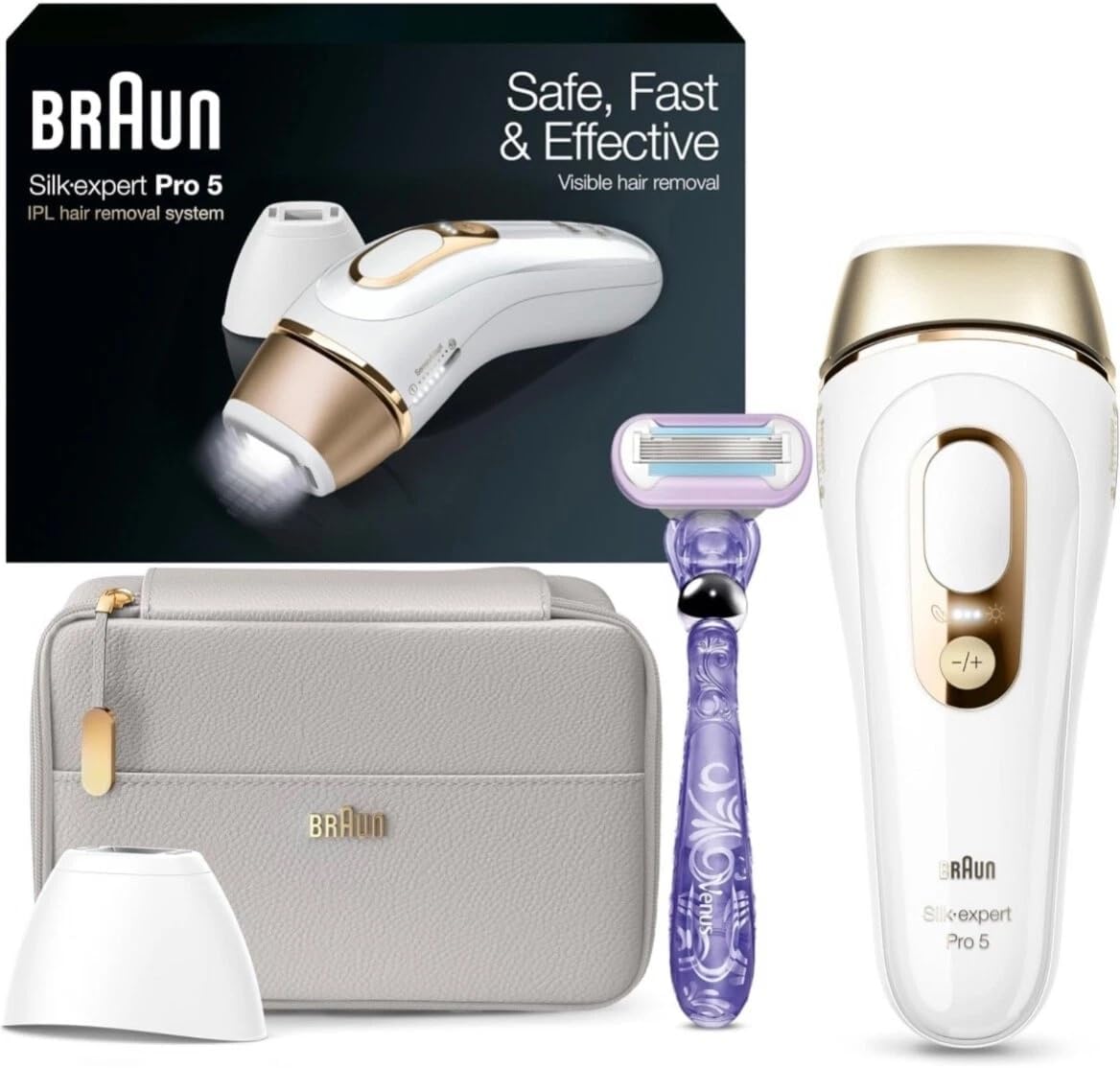

IPL shoppers often assume a skin tone sensor confirms whether every treatment will be safe, yet its role is narrower. Our ipl skin tone sensor explained guide for September 2026 examines 1 option and the decisions that still require careful judgment.
A sensor may support initial color classification, but it cannot evaluate medications, recent tanning, tattoos, or every contraindication. Before choosing treatment equipment, review our broader at-home IPL and laser hair removal guidance alongside the manufacturer’s instructions.

Pros
- Accurate Fitzpatrick skin type classification
- Portable and lightweight design
- Easy to use for professionals
- Includes batteries for immediate use
- Compact for travel and storage
Cons
- Non-rechargeable sealed battery unit
- Fragile test window requires careful handling
- Not waterproof for wet environments
Specifications
| Package Dimensions | 6.22 x 2.01 x 1.26 inches; 3.21 ounces |
|---|---|
| Batteries | 1 C batteries required. (included) |
| UPC | 715748675518 |
| Manufacturer | PMUBEAUTY |
| ASIN | B0C772RJ33 |
| Best Sellers Rank | #226,495 in Beauty & Personal Care (See Top 100 in Beauty & Personal Care) #6 in Skin Moisture Analyzers |
| Customer Reviews | 4.3 4.3 out of 5 stars (20) |
Verify the current product variation before purchase; specifications may change.
Detailed Review
What stands out in the currently available product data:
- Accurately classifies skin types using the Fitzpatrick scale for precise color matching in permanent makeup
- Portable and lightweight design allows easy carry for on-the-go consultations and client demonstrations
- Automatic testing system provides quick and reliable skin tone readings without manual guesswork
- Supports six skin types from pale to deeply pigmented, ensuring broad compatibility for diverse clients
- Includes C batteries for immediate use, eliminating the need for separate power source purchases
- Compact size fits easily into a beauty kit or professional tool bag for salon and home use
Best For / Avoid If
Best for buyers prioritizing
- Accurate Fitzpatrick skin type classification
- Portable and lightweight design
- Easy to use for professionals
Consider another option if
- Non-rechargeable sealed battery unit
- Fragile test window requires careful handling
- Not waterproof for wet environments
ipl skin tone sensor explained: Buying Criteria That Matter
Sensor Type and Intended Purpose
First determine whether you need an integrated IPL sensor or a separate skin color analyzer. An integrated sensor typically informs its own device, while a standalone reader provides information that you must interpret independently.
The listed portable analyzer is described as an automatic skin color testing system associated with facial beauty and permanent makeup color selection. Supplied information does not establish direct communication with an IPL handset, so buyers should not assume automatic intensity adjustment.
Skin Classification Method
The product description references the Fitzpatrick skin type scale, which classifies skin partly through its response to ultraviolet exposure. That framework is useful context, but complexion color alone does not always determine a person’s Fitzpatrick type.
Ask whether the device reports a color reading, a Fitzpatrick category, or treatment guidance tied to a specific platform. Without documented accuracy, calibration procedures, or validation data, interpret the result as supporting information rather than a definitive treatment clearance.
Compatibility With Your IPL Device
A standalone sensor does not expand the approved skin tone range of an IPL machine. If your treatment device excludes a particular tone, an external reading cannot override that restriction or establish compatibility.
Compare the analyzer’s output with the tone chart and operating instructions supplied by your treatment manufacturer. Shoppers evaluating deeper complexions should also consult our guide to laser hair removal options for dark skin before selecting technology.
Measurement Conditions and Repeatability
Skin readings can be affected by makeup, self-tanner, uneven pigmentation, lighting, and the area selected for measurement. Clean, dry skin and consistent placement provide a more useful comparison, although supplied documentation does not quantify this analyzer’s repeatability.
Measure the actual treatment area rather than relying only on a facial or inner-arm reading. If results differ across adjacent areas, follow the more conservative device setting and perform the patch test required by your IPL manual.
Safety Boundaries and Contraindications
A tone reading cannot detect every reason to avoid light-based treatment, including photosensitizing medication or certain skin conditions. Recent sun exposure, self-tanning products, active irritation, and treatment over tattoos may also change whether IPL is appropriate.
Consult the IPL manufacturer’s contraindication list before every treatment cycle, not merely during initial setup. Seek advice from a qualified clinician when pregnancy, medication, persistent lesions, unusual pigmentation, or a diagnosed skin condition creates uncertainty.
Documentation, Calibration, and Ownership
A useful analyzer should include understandable instructions, clear output definitions, cleaning guidance, and an identified calibration process. The supplied listing does not provide enough detail to confirm calibration intervals, replacement components, warranty terms, or independent accuracy evidence.
That missing information matters more for professional workflows than occasional home reference checks. Salon operators should request documentation directly and compare it with requirements for commercial laser hair removal equipment before relying on readings during client consultations.
Why You Should Trust Us
Our assessment separates documented listing information from conclusions that the available evidence cannot support. We evaluated intended use, classification method, IPL compatibility, safety boundaries, documentation, and likely ownership implications without claiming physical testing.
We also avoid treating customer ratings or marketing language as proof of measurement accuracy. Where calibration data, technical specifications, and validation evidence are unavailable, our recommendation remains deliberately conditional rather than assuming professional-grade performance.
Final Thoughts
As the best overall option in this limited shortlist, the Smart Skin Analyzer, Portable Skin Color Tester suits buyers wanting a separate color-reference tool. Its portability and automatic testing description are relevant, but evidence supplied does not confirm IPL integration or clinical accuracy.
It is also the best value choice by default because no alternative products were supplied for direct comparison. Choose it only if a general skin color assessment supports your workflow and you accept uncertainty surrounding calibration, warranty coverage, and output interpretation.
For permanent makeup color-selection context, the Smart Skin Analyzer, Portable Skin Color Tester is the most specifically aligned option. For IPL treatment clearance, prioritize the sensor built into your approved device and explore professional laser hair removal machines when your needs exceed consumer equipment.
Frequently Asked Questions
What does an IPL skin tone sensor actually do?
An integrated sensor estimates skin tone and may help a compatible IPL device select or restrict energy settings. Its exact behavior depends on the manufacturer, so consult the operating manual rather than assuming every sensor works identically.
Can a skin tone sensor guarantee that IPL is safe?
No sensor can guarantee safe treatment because skin color is only one consideration. Contraindications, medications, recent tanning, tattoos, skin conditions, device condition, and correct technique must also be evaluated.
Is a standalone skin analyzer the same as an IPL sensor?
No, a standalone analyzer generally reports information for separate interpretation, while an integrated sensor operates within a specific treatment system. Unless compatibility is explicitly documented, do not expect an external analyzer to control IPL intensity.
How accurate are IPL skin tone sensors?
Accuracy varies by sensor design, calibration, measurement conditions, and the definition of the reported categories. No accuracy or independent validation data were supplied for this analyzer, preventing a reliable quantitative judgment.
Should I patch test after using a tone sensor?
Yes, follow your IPL manufacturer’s patch-test protocol even when the sensor permits treatment. Wait for the specified observation period and stop if you experience a reaction beyond what the manual describes as expected.
Does ipl skin tone sensor explained guidance change in 2026?
The central principle remains consistent: a sensor supports screening but does not replace device-specific instructions or professional advice. Product firmware, approved ranges, and contraindication guidance can change, so verify current documentation before use.
Can IPL be used on every dark skin tone?
No, compatibility depends on the device’s light source, energy controls, and approved skin tone range. Review equipment designed for deeper complexions in our professional devices for dark skin tones guide, then confirm eligibility with the manufacturer.
Evidence and safety references
These references support the general technology and safety context. Product specifications can change; confirm the current manual and regulatory status before use.
- American Academy of Dermatology: unwanted hair removal and laser safety
- Systematic review: long-term hair reduction with lasers and IPL
- Systematic review: paradoxical hair growth after laser or IPL
- FDA 510(k) summary: home-use IPL hair-removal device
Safety note: Beauty devices are not a substitute for diagnosis or treatment. Follow the device instructions and consult a qualified clinician if you have a skin condition, take photosensitizing medication, are pregnant, or are unsure whether a device is appropriate.