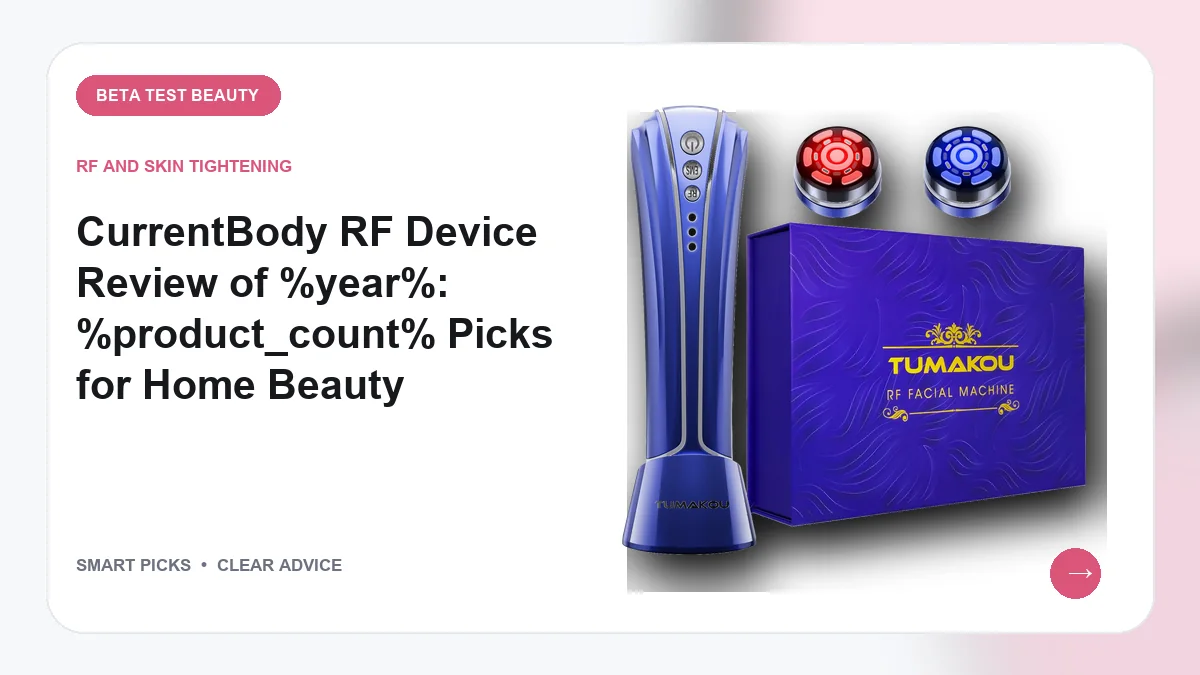

Multifunction beauty devices can group radio frequency and LED under one product name, but these technologies do different things. To distinguish them, check the device’s documented energy type, treatment instructions, and controls instead of relying on appearance or broad claims.
This guide explains what to verify before using or buying a combination device, including how to avoid assuming that one treatment mode includes another. For context on device categories and their tradeoffs, see our RF and Skin Tightening guide.

Pros
- Multi-RF and DMA combination
- At-home convenience
- Pollogen brand association
- 2023 model update
- Handheld facial form factor
Cons
- Battery life and charging unspecified
- Treatment protocol not documented
- Warranty details not provided
Specifications
| Package Dimensions | 8 x 5 x 4 inches; 1.75 pounds |
|---|---|
| Date First Available | September 6, 2023 |
| Manufacturer | TriPollar |
| ASIN | B0CHG97TT9 |
| Best Sellers Rank | #360,177 in Beauty & Personal Care (See Top 100 in Beauty & Personal Care) #592 in Wrinkle & Anti-Aging Devices |
Verify the current product variation before purchase; specifications may change.
Detailed Review
What stands out in the currently available product data:
- Dual-technology approach with Multi-RF and DMA in a single session
- At-home design keeps professional-grade technology accessible without appointments
- Newer-generation TriPollar Stop model with a 2023 release date
- Compact handheld form factor allows targeted treatment of facial areas
- Pollogen-branded model line adds a clinical aesthetic pedigree
- Suitable for users who prioritize convenience and consistent self-care routines
Best For / Avoid If
Best for buyers prioritizing
- Multi-RF and DMA combination
- At-home convenience
- Pollogen brand association
Consider another option if
- Battery life and charging unspecified
- Treatment protocol not documented
- Warranty details not provided
Start with the manufacturer’s manual and product specifications. Look for explicit terms such as radio frequency or RF, and LED or light-emitting diode; a device’s shape, warmth, or lighted display cannot confirm which technology it uses.
1. Identify each energy type by its documented name
RF means radio frequency energy, while LED devices emit light at specified wavelengths. These labels describe different technologies, so a product that mentions one should not be assumed to provide the other.
Read the technical details and manual, not only the product title. If the documentation says “multi-RF” or names a proprietary system, treat that as the manufacturer’s description, then check whether it separately identifies LED wavelengths and a light-treatment protocol.
2. Check whether modes are separate or combined
A multifunction device may offer distinct RF and LED modes, combine technologies during one treatment, or use only one energy type. The control panel and instructions should clarify which applies, when to select each mode, and whether treatments can be performed together.
Do not infer a combined treatment from multiple buttons, colored indicator lights, or a broad “multi-technology” label. If the manual does not explain the sequence, duration, and intended use for each mode, contact the manufacturer before using the device.
3. Compare the actual treatment protocols
RF instructions should state how to move or position the applicator, how long to treat each area, and how often to use the device. Follow the supplied schedule rather than creating longer sessions or increasing frequency because a treatment feels mild.
LED instructions should identify the light mode and specify positioning, session duration, and frequency. Eye protection and skin preparation requirements vary by product, so follow that device’s manual rather than applying another brand’s routine.
4. Treat settings and sensations as clues, not proof
Some RF devices produce a warming sensation, but warmth alone does not verify RF delivery or establish that a setting is suitable. LED use may not feel similarly warm, yet sensation cannot reliably identify the wavelength or prove that a light mode is active.
Look for clearly labeled controls, mode indicators, and manufacturer instructions that explain each setting. If a device provides no way to tell which mode is running, ask the manufacturer for clarification instead of guessing from color, heat, or sound.
5. Verify specifications and evidence without overreading claims
For LED, useful documentation identifies wavelength or wavelengths and explains the intended use. For RF, look for the manufacturer’s description of the technology, operating instructions, and any stated treatment limitations; do not assume that a technical term alone proves effectiveness.
Separate a listed specification from evidence supporting an outcome. Marketing language, device names, and user ratings do not substitute for product-specific evidence, and evidence for one technology cannot automatically be applied to another mode.
6. Check safety, compatibility, and ownership requirements
Read contraindications before purchasing or using either technology, especially if you have a health condition, use photosensitizing medication, or have concerns about heat or light exposure. Ask a qualified professional when the manual flags your circumstances or leaves an important safety question unanswered.
Confirm whether the device needs a compatible gel, cleanser, protective eyewear, app, or replacement parts, and whether these add recurring cost. Follow any patch-test guidance, clean the device as directed, and stop use if you experience unexpected discomfort or irritation.
For shoppers comparing RF combinations with simpler options, our RF and microcurrent device guide explains why different technologies should not be treated as interchangeable. LED-specific expectations also differ, as outlined in our LED masks and light therapy category.
Why You Should Trust Us
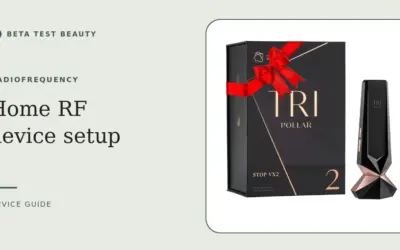
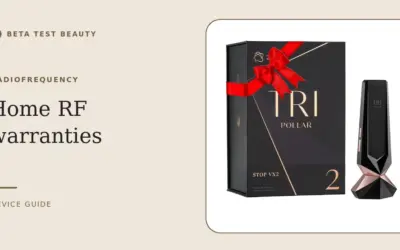
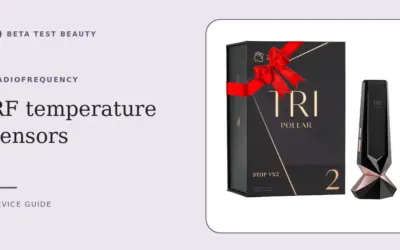
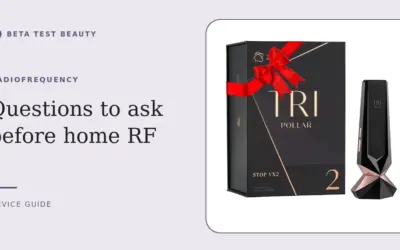
We base this guide on the distinctions that buyers can verify in manufacturer specifications and instructions: named energy types, mode controls, treatment protocols, safety requirements, and ownership needs. The published product information identifies the TriPollar Stop Vx 2 | Pollogen Stop U Model UXV as a multi-RF and DMA device, but provides no detailed specifications, manual, or LED information.
That evidence does not support describing this product as an LED device or making claims about clinical outcomes, settings, or treatment performance. We distinguish published product details from general buying guidance and recommend checking current manufacturer documentation before making a decision.
Final Thoughts
Among the listed products, the TriPollar Stop Vx 2 | Pollogen Stop U Model UXV is the only identified option, and its provided description names Multi-RF and DMA technology. It may suit shoppers specifically considering those features, but the available information does not establish that it includes LED.
No separate value pick or LED-specific pick can be responsibly named from a single product entry with no detailed specifications. Before purchase, confirm the exact modes, protocol, compatibility, warranty, and any consumable costs with the manufacturer; compare broader choices in our RF device guide for face, neck, and jawline.
FAQs
How can I tell whether a beauty device uses RF or LED?
Check the manual and specifications for explicit RF or LED identification. Confirm the mode controls and protocol; appearance and sensation are not reliable identifiers.
Can one multifunction beauty device use both RF and LED?
It may, but the product documentation must confirm both technologies and explain whether they operate separately or together. Do not infer LED from a product’s general “multifunction” label.
Does a warm sensation mean a device is using RF?
No. Warmth is not proof of RF output, and lack of warmth does not identify a device as LED. Use documented mode labels and instructions instead.
What LED specifications should I check before buying?
Look for stated wavelength information, the intended mode, session instructions, and relevant safety guidance. If these details are missing, ask the manufacturer rather than assuming what the device emits.
Can I use RF and LED modes in the same session?
Only if the manufacturer’s instructions explicitly permit that sequence. Follow the listed order and schedule, and do not combine treatments based on advice for a different device.
Is the TriPollar Stop Vx 2 an RF and LED device?
The published description identifies Multi-RF and DMA technology but does not document LED. Check the current product manual or contact the manufacturer to confirm whether an LED mode exists.
What safety checks matter before using a home RF or LED device?
Read contraindications, follow patch-test and eye-protection guidance where specified, and use only the recommended settings and schedule. Seek professional advice if a medical condition or medication raises a safety question.
Where can I compare RF and LED device categories?
Start with the site’s RF and Skin Tightening category and compare its scope with the LED documentation supplied by each manufacturer. Evaluate protocols and safety requirements, not just feature labels.
Evidence and safety references
These references support the general technology and safety context. Product specifications can change; confirm the current manual and regulatory status before use.
- Systematic review: radiofrequency-based facial rejuvenation
- Systematic review: home-based dermatology devices
- Randomized trial: home-use multi-energy facial device
Safety note: Beauty devices are not a substitute for diagnosis or treatment. Follow the device instructions and consult a qualified clinician if you have a skin condition, take photosensitizing medication, are pregnant, or are unsure whether a device is appropriate.