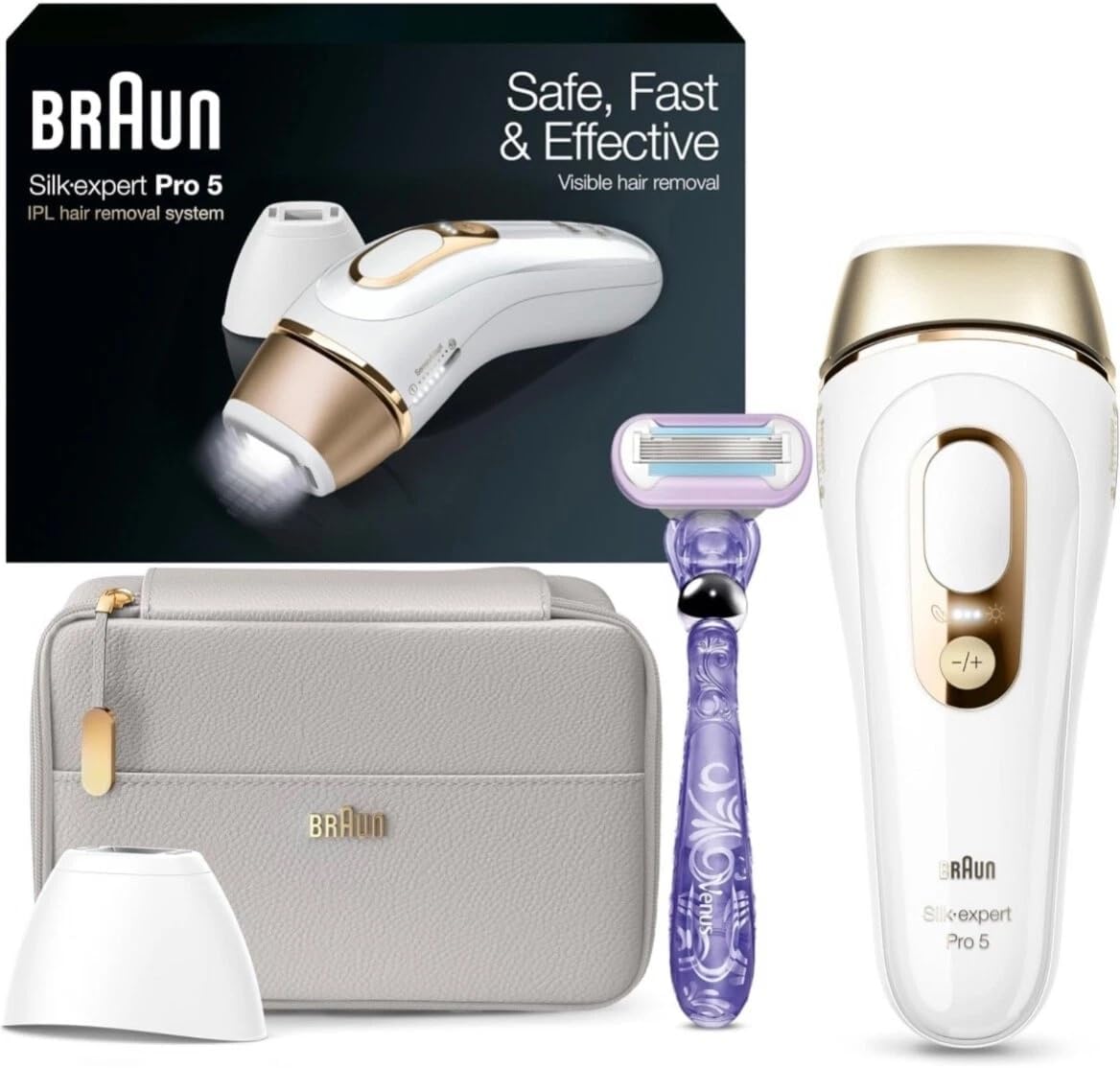

Targeting delicate zones like the upper lip, chin, underarms, and bikini line demands far more optical precision than treating broad leg surfaces. Compact facial contours require specialized window attachments, accurate contact sensors, and carefully calibrated energy levels to prevent accidental light leaks. Understanding how to choose an ipl device for small areas ensures smooth results without causing surface irritation on fragile skin tissue.
Selecting the right hardware comes down to balancing ergonomic handling with targeted optical safety. Readers curious about wider light therapies can explore our look at the best luxury LED face masks to understand complementary home treatments. Below, we break down essential features that separate general hair removers from genuine precision tools.

Pros
- Four area-specific attachments
- Skin-tone and temperature sensing
- Companion app with reminders
- Face, bikini, and underarm coverage
- Corded-style premium treatment system
Cons
- Requires repeated treatment sessions
- Not a true laser device
- Facial use limited below cheekbones
Specifications
| Color | Sand |
|---|---|
| Product Group | Beauty |
| Binding | Health and Beauty |
Verify the current product variation before purchase; specifications may change.
Detailed Review
What stands out in the currently available product data:
- Four attachments target body, face, bikini, and underarm areas
- SenseIQ sensors monitor skin tone, contact, and temperature
- App provides treatment reminders, routine guidance, and practical tips
- Designed for long-lasting hair reduction at home
- Facial attachment is intended for use below the cheekbones
- Supports treatment planning across multiple body areas
Best For / Avoid If
Best for buyers prioritizing
- Four area-specific attachments
- Skin-tone and temperature sensing
- Companion app with reminders
Consider another option if
- Requires repeated treatment sessions
- Not a true laser device
- Facial use limited below cheekbones
Targeted Attachment Size and Curvature
Broad treatment windows work efficiently on straight leg surfaces, but they often fail to trigger flash sensors around uneven facial contours. A dedicated small-area window typically measures between two and three square centimeters. This compact size allows full surface contact along the jawline, upper lip, and delicate underarm folds.
Curved optical caps further enhance skin contact by matching anatomical transitions. A concave window hugs curved ridges around the armpits, while a flat or convex filter provides accurate placement over the chin. Without properly contoured hardware, devices repeatedly refuse to flash due to incomplete skin coverage.
Contact Safety Sensors and Eye Protection
Operating an intense pulsed light system near facial structures introduces serious optical concerns. Advanced machines employ smart contact sensors that disable high-energy flashing unless the treatment window presses completely flat against the skin surface. This engineering safeguard keeps stray pulses from reflecting upward toward the eyes.
Integrated UV filters built into dedicated facial attachments protect sensitive thin skin from harsh radiation. Systems like the SenseIQ array monitor continuous skin contact and flash readiness simultaneously. You can learn more about dedicated optical protocols in our guide to laser hair removal machines for men where dense growth patterns require similar safety parameters.
Skin Tone Detection and Energy Modulation
Melanin density varies significantly across different zones of the body. Underarms and bikini areas frequently present deeper surface pigmentation or post-inflammatory friction marks than surrounding regions. Precision devices use real-time skin tone sensors that read the treatment zone and automatically select safe optical energy fluences.
Manual overrides remain helpful for customized comfort, but automated safety sensors prevent accidental burns on darker transitional skin. If surface pigment is too dark for optical energy delivery, smart devices lock out flash discharge entirely. For extensive tone evaluations, review our specialized analysis on laser hair removal for dark skin.
| Attachment Type | Typical Window Size | Ideal Body Location | Primary Benefit |
|---|---|---|---|
| Precision Face Cap | 2 cm² (Flat) | Upper lip, chin, jawline | Prevents light leakage near eyes |
| Curved Underarm Cap | 3 cm² (Concave) | Armpits, hollows | Ensures direct skin sensor contact |
| Bikini Contour Cap | 3 cm² (Curved with extra filter) | Bikini margins, sensitive zones | Filters coarser hair heat buildup |
| Standard Body Window | 4 cm² or larger | Legs, arms, chest | Fast coverage over broad flat planes |
Flash Precision Modes: Stamp Versus Glide
Continuous glide modes allow users to slide a device along continuous leg paths for rapid sessions. However, small areas require an intentional stamp-and-flash mechanism. Single-flash actuation lets you position the window precisely over specific hair clusters without overlapping energetic pulses.
Triggering each pulse manually prevents thermal stacking on sensitive epidermal layers. Controlled stamp modes also give users time to inspect the treatment path, ensuring no patches get skipped along complex margins like the bikini line.
Device Ergonomics and Cordless Maneuverability
Treating hard-to-reach contours requires flexible wrist movement and comfortable handling angles. Gun-style designs with angled handles generally provide superior leverage when working on underarms or the back of the thighs. Heavy rectangular bricks can prove cumbersome when adjusting around tight corners.
Cordless capability offers unmatched spatial freedom when navigating delicate bikini contours. While corded devices provide uninterrupted electrical flow, hybrid systems allow cordless operation for precision zones alongside tethered operation for extended leg sessions.
Why You Should Trust Us
Our editorial approach centers on technical specification analysis, optical physics, and user ergonomics across personal wellness technology. We break down optical fluences, attachment design geometry, and safety mechanisms directly from manufacturer documentation and verified engineering guidelines.
Rather than relying on marketing claims, we evaluate devices against real-world mechanical demands and safety considerations. We assess product build quality, sensor reaction times, and interface responsiveness to help readers invest in dependable personal care hardware.
Final Thoughts
Selecting the proper system requires evaluating how well a device adapts to anatomical curves. For consumers seeking a comprehensive solution, the Philips Lumea 9000 Series IPL Hair Removal Device serves as our top recommendation. Its dedicated four-cap configuration provides custom glass contours and specialized optical filters for the face, underarms, and bikini area.
The integrated SenseIQ technology on the Philips Lumea 9000 Series IPL Hair Removal Device reads skin tones instantly, removing the guesswork from sensitive treatments. If you want to compare broader clinical hardware options, explore our directory of the best commercial laser hair removal equipment for deeper insight into salon-grade alternatives.
FAQs
Can I use a standard body attachment on small areas?
Using a large window on small facial curves often prevents the contact sensor from engaging properly. Furthermore, broad windows increase the risk of optical glare reflecting toward the eyes, making dedicated precision attachments significantly safer.
How often should I treat small facial areas with IPL in 2026?
Most clinical protocols suggest treating facial hair once every two weeks for the initial four to six sessions. Because facial hair cycles move quickly, adhering to scheduled intervals helps capture folicles in the active growth phase.
Does IPL work safely on the male facial beard area?
Most manufacturers advise against using consumer IPL on dense male beard growth. The thickness and density of beard folicles absorb excessive thermal energy, which can lead to blistering, uneven patchiness, and surface burns.
What makes how to choose an ipl device for small areas different from body devices?
Small-area devices require smaller window apertures, ergonomic heads, and specialized optical filters to target tight spaces safely. In contrast, standard body tools prioritize rapid glide rates and large rectangular flash apertures for broad skin surfaces.
Should I shave before using an IPL device on the upper lip?
Yes, shaving the target area cleanly before treatment is essential for safety and comfort. Surface hair absorbs the light flash before it reaches the root, causing unpleasant surface burning and reducing treatment efficacy.
Can IPL devices be used on the delicate bikini line?
IPL is safe for standard bikini margins when using an attachment designed to filter intense heat. Users should consult our overview of at-home IPL and laser hair removal for comprehensive skin preparation steps and safety boundaries.
Why does my device fail to flash around my jawline?
Jawline contours prevent flat windows from making full surface contact. Built-in contact sensors deliberately suppress the flash to prevent light escape; adjusting the window angle or using a smaller precision cap resolves this issue.
Is cooling technology necessary for small area treatments?
Integrated cooling plates or sapphire glass tips improve comfort, particularly on sensitive bikini and upper lip skin. While not strictly mandatory, active skin cooling minimizes stinging sensations during high-fluence flash emissions.
Evidence and safety references
These references support the general technology and safety context. Product specifications can change; confirm the current manual and regulatory status before use.
- American Academy of Dermatology: unwanted hair removal and laser safety
- Systematic review: long-term hair reduction with lasers and IPL
- Systematic review: paradoxical hair growth after laser or IPL
- FDA 510(k) summary: home-use IPL hair-removal device
Safety note: Beauty devices are not a substitute for diagnosis or treatment. Follow the device instructions and consult a qualified clinician if you have a skin condition, take photosensitizing medication, are pregnant, or are unsure whether a device is appropriate.