
Uneven curls often start before the wand heats up: sections may be too thick, too wide, or difficult to hold apart. A consistent layout helps you see which hair is styled and which still needs attention.
This guide explains how to section hair before using a curling wand, including adjustments for length, density, and curl size. The published product information describes one multi-attachment styling set, but does not establish that any tool works for every hair type.
For other heated styling formats, see our guide to heated hair brushes and their styling role. A brush attachment and a curling wand are not interchangeable: the former listed here is a heated brush and does not blow air.

Pros
- Affordable for a multi-tool set
- Heats up quickly
- Versatile barrel sizes included
- Dual voltage for travel
- Good for fine or medium hair
Cons
- Not ideal for thick or coarse hair
- Gets very hot even on low settings
- Barrels do not retract
Specifications
| Color | Rose Pink |
|---|---|
| Size | Curling Wand(0.5"-1.25") |
| Dimensions | 14.960629906 x 1.574803148 x 1.574803148 inches |
| Weight | 1.8077905484 Pounds |
| Product Group | Beauty |
| Binding | Health and Beauty |
Verify the current product variation before purchase; specifications may change.
Detailed Review
What stands out in the currently available product data:
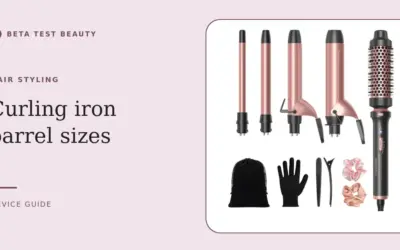
- Includes 4 interchangeable curling iron barrels from 0.5 to 1.25 inches for varied curl sizes
- Heated round brush attachment creates blowout volume and lift at the roots
- Ceramic-coated barrels reduce friction and heat damage for smoother glide
- Dual voltage (120-240V) makes it travel-friendly worldwide
- 360-degree swivel cord prevents tangling during use
- Anti-scalding protection on the barrel for safer handling
Start with dry, detangled hair and a stable mirror view. Follow your tool’s manual for preparation, heat settings, and safety; the published product details do not specify a universal setting for every hair texture or condition.
Choose section size before choosing speed
Use smaller sections when hair is dense, long, or difficult to wrap neatly. Smaller panels are easier to control around the barrel, though they take longer to style.
Wider sections can make a faster pass through finer or less dense hair, but an oversized panel may not wrap evenly. If the outer strands curl while the center stays loose, reduce section width before increasing heat or repeating passes.
Build a simple four-quadrant layout
Make a center part from forehead to nape, then divide hair from ear to ear. Clip each of the four resulting areas separately, leaving one lower section free to begin.
This layout keeps upper layers out of the way and makes progress visible. If your hair is very thick, subdivide each quadrant again; if it is short or fine, larger working areas may be easier to manage.
Work from the bottom upward
Release a horizontal row near the nape and clip the remaining hair back. After styling that row, let down the next row and continue toward the crown, saving the top layers for last.
Keep unused hair secured without pulling tightly. If sections repeatedly slip from clips, reduce the amount held in each clip rather than gripping hair harder or rushing the wrap.
Keep each panel narrow enough to wrap
Take a vertical slice from the released row, then comb it smooth before winding. As a practical starting point, make the panel no wider than the barrel’s working length and narrow it further if hair overlaps heavily.
Exact section dimensions depend on barrel design, hair length, and the look you want; the published specifications do not prescribe them. Prioritize an even, manageable panel over a fixed measurement copied from someone with different hair.
Match barrel size to the intended result
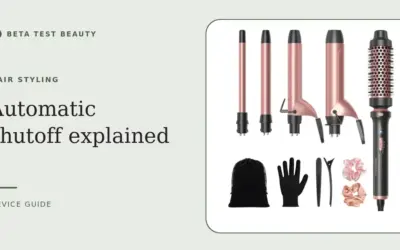
The listed Wavytalk set includes interchangeable barrels sized 1/2 inch, 3/4 inch, 1 inch, and 1 1/4 inches, plus a 1.5-inch thermal round brush. The product description associates smaller barrels with smaller curls and larger barrels with looser styles, but results also depend on technique and hair.
Choose the attachment before sectioning so panels can be sized around the tool you plan to use. For general context on a different heated format, our flat iron guide covers tools designed for smoothing rather than wand wrapping.
Keep direction and tension consistent
Wrap each panel with steady tension and use a repeatable direction within each side. Alternating direction can create a less uniform finish; whether that look suits you is a styling choice, not a requirement.
Follow the tool’s instructions for contact time and handling. The product data lists two temperature settings from 302°F to 410°F, but does not identify which setting suits a particular hair type, so avoid treating a range as personalized guidance.
Check the layout before adding heat
Before styling, confirm that clips hold securely, panels are detangled, and the working area is clear. Use heat protection appropriate to your routine and follow the manufacturer’s safety directions, including glove guidance where applicable.
Keep heated surfaces away from skin, clips, and nearby materials. Stop if the tool, cord, or attachment appears damaged, and consult its manual or manufacturer rather than improvising a repair.
Why You Should Trust Us
We base product-specific statements here on the published product description, including attachment sizes, listed temperature range, dual-voltage claim, and included accessories. We do not present those details as independent test results or proof of a particular styling outcome.
Our sectioning guidance focuses on repeatable technique and practical troubleshooting, not guaranteed curl performance. The published data does not provide warranty terms, independent durability findings, or hair-type-specific test evidence, so those points should be confirmed with the seller or manufacturer before purchase.
Final Thoughts
For an all-purpose attachment range, the listed Wavytalk 5 in 1 Curling Iron Set with Heated Round offers several barrel diameters and a thermal brush attachment. That makes it a plausible option for someone who wants to vary styling formats, but the published description alone cannot establish superior results or long-term reliability.
There is only one listed product, so a meaningful best-value comparison or competing best-overall pick is not possible. Consider it only if its listed attachments match your routine; skip the set if you need a tool with documented warranty details or verified performance evidence not included here.
The set’s dual-voltage specification may matter to travelers, while the included glove and clips add practical accessories. Check plug compatibility and manufacturer guidance for your destination, and compare the full warranty and return terms before deciding; see our luxury hair styling tools category for related coverage.
FAQs
How do you section hair before using a curling wand?
Divide hair into four quadrants, clip three away, and work through the loose lower area in manageable rows. Release the next row only after finishing the one below it.
Should hair be wet or dry before using a curling wand?
Follow the tool manual. The published product information does not state a wet-hair use case for its curling attachments, so do not assume they are designed for damp hair.
How thick should each section be?
Use a panel that wraps evenly without excessive overlap. Reduce its width if the center does not receive consistent contact or the section becomes difficult to control.
Why do my curls look uneven?
Common technique causes include inconsistent section size, uneven tension, and changing the wrap direction. Adjust one factor at a time so you can identify what changes the result.
Do smaller sections make curls tighter?
Section size affects how much hair is wrapped at once, while barrel diameter is another important styling variable. The product description links smaller barrels with smaller curls, but does not guarantee a result for every hair type.
Which barrel size should I use first?
Choose based on the look you want and the attachment instructions. The listed set includes four barrel diameters, but the product data does not specify a universal starting size or personalized temperature.
Can the heated round brush replace a curling wand?
Not necessarily. The published description says its 1.5-inch thermal round brush does not blow air and is intended for shaping and volume, while the barrels are separate attachments.
What should I check before buying a multi-attachment set?
Confirm that attachment sizes, temperature controls, voltage, included accessories, warranty, and return terms suit your needs. Warranty terms are not supplied here, so verify them directly before purchase.
Evidence and safety references
These references support the general technology and safety context. Product specifications can change; confirm the current manual and regulatory status before use.
- Study: hair-shaft damage, dryer temperature and distance
- Study: effects of heat treatment on hair structure
Safety note: Beauty devices are not a substitute for diagnosis or treatment. Follow the device instructions and consult a qualified clinician if you have a skin condition, take photosensitizing medication, are pregnant, or are unsure whether a device is appropriate.